
Digital Wallets and the Evolution of Mobile Banking: Shaping the Future of Global Finance

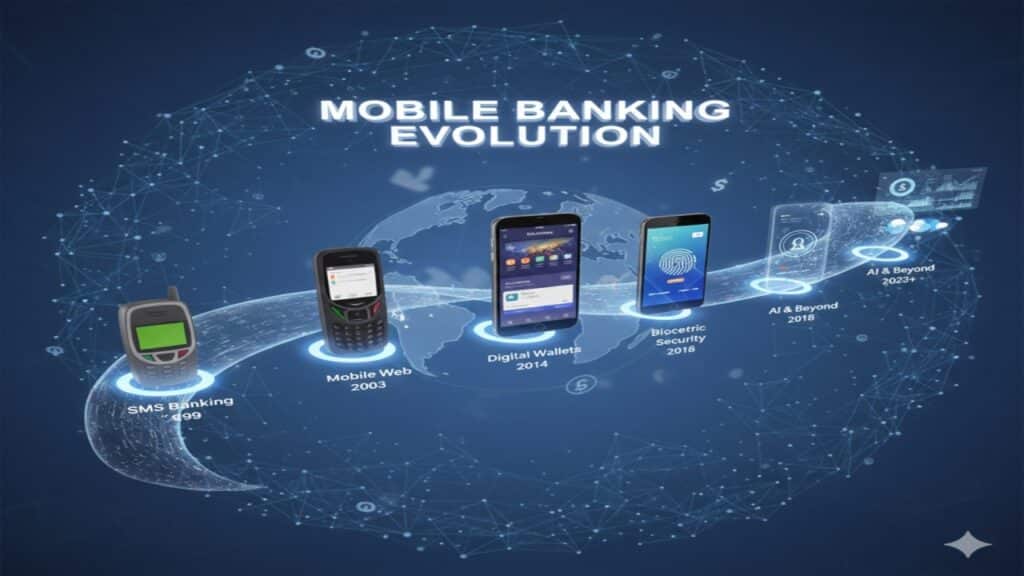
The global financial landscape is undergoing a profound paradigm shift. Not long ago, managing personal finances required physical visits to brick-and-mortar bank branches, waiting in lines, and signing paper documents. Today, the entire banking ecosystem fits comfortably inside a smartphone.
The convergence of mobile banking apps and digital wallets has revolutionized how we earn, spend, save, and invest. This evolution is not merely a story of convenience; it represents a fundamental restructuring of global commerce, financial inclusion, and consumer behavior.
1. The Early Days: From SMS Alerts to App-Based Banking
To understand where we are, we must look at how mobile banking began. In the early 2000s, mobile banking was primitive, relying primarily on Short Message Service (SMS) text alerts. Customers could text a specific code to their bank to receive their account balance or a list of recent transactions.
The launch of the smartphone era—marked by the introduction of the iPhone in 2007 and the Android operating system shortly after—changed everything.
[SMS Banking] ➔ [Basic Mobile Web] ➔ [Dedicated Banking Apps] ➔ [Integrated Digital Wallets]
Early banking apps were essentially desktop websites squeezed into smaller screens. However, as mobile processors advanced and data networks transitioned from 3G to 4G, banks began developing native applications. These apps allowed users to transfer funds internally, pay bills electronically, and eventually, deposit physical checks using their phone’s camera—a feature known as Remote Deposit Capture (RDC).
2. The Rise of the Digital Wallet: More Than Just a Card Holder
While mobile banking apps digitized traditional banking services, digital wallets (or e-wallets) revolutionized the point-of-sale experience. A digital wallet is a financial application that securely stores users' payment information, credit cards, loyalty cards, and even identification documents on a mobile device.
The turning point for digital wallets came with the introduction of major tech-led platforms:
- Apple Pay (2014): Introduced mainstream Near Field Communication (NFC) technology, allowing contactless payments by tapping a phone against a terminal.
- Google Wallet / Google Pay: Provided a highly adaptable ecosystem for Android users globally.
- Samsung Pay: Utilized both NFC and Magnetic Secure Transmission (MST) technology, allowing it to work on older card readers that didn’t support contactless tapping.
Simultaneously, third-party fintech giants like PayPal, Venmo, and Cash App transformed peer-to-peer (P2P) transfers. Splitting a dinner bill or paying a freelancer no longer required cash or bank account numbers; it required just a phone number or a username.
3. Key Technological Enablers of the Evolution
The seamless integration of digital wallets and mobile banking relies on a sophisticated tech stack operating silently in the background.
Tokenization and Advanced Security
Security was initially the biggest hurdle to consumer adoption. Digital wallets solved this through tokenization. When you load a credit card into a digital wallet, the actual card number is never stored on the device or shared with merchants. Instead, it is replaced with a unique, randomized string of numbers called a "token." Even if a hacker intercepts the transaction data, the token is useless outside that specific context. Combined with biometric authentication (facial recognition and fingerprints), mobile payments have become arguably safer than physical cards.
Open Banking and APIs
Application Programming Interfaces (APIs) act as bridges between different software programs. Under "Open Banking" regulations in many parts of the world, traditional banks are required to securely share data with authorized fintech third parties. This allows a single digital wallet to aggregate data from multiple bank accounts, offering users a holistic view of their financial health.
4. The Super-App Phenomenon and Financial Inclusion
In Western markets, mobile banking and digital wallets often exist as separate, collaborating apps. However, in emerging markets, they have merged into all-in-one platforms known as Super-Apps.
| Region | Primary Platforms | Impact & Ecosystem |
|---|---|---|
| China | WeChat Pay, Alipay | Transformed a cash-reliant society directly into a cashless economy using QR codes, bypassing the credit card phase entirely. |
| East Africa | M-Pesa | Developed by Vodafone/Safaricom, this SMS-based wallet allowed millions of unbanked citizens to deposit, withdraw, and transfer money, driving massive economic growth. |
| Southeast Asia | Grab, GoTo | Started as ride-hailing services but expanded into massive digital wallets offering banking, insurance, and micro-loans. |
These platforms prove that the evolution of mobile banking is a powerful tool for global financial inclusion, bringing banking services to billions of people who lack access to physical bank branches.
5. Current Trends: The Convergence Era
We are currently witnessing the complete blur of the lines between traditional banking and digital wallets. Several major trends define this current era:
- Neobanks and Digital-Only Banking: Institutions like Revolut, Chime, and Nubank operate entirely without physical branches. Their user experience is built entirely around the mobile app, blending the features of a traditional checking account with the agility of a digital wallet.
- Buy Now, Pay Later (BNPL): Services like Klarna, Afterpay, and Affirm have been deeply integrated into digital wallets, offering consumers instant, interest-free installment loans at the digital checkout counter.
- Cryptocurrency Integration: Modern digital wallets increasingly allow users to buy, sell, and hold cryptocurrencies like Bitcoin and Ethereum alongside traditional fiat currencies.
6. The Road Ahead: Challenges and the Future
Despite its meteoric rise, the mobile financial ecosystem faces ongoing challenges. Cybersecurity remains a continuous cat-and-mouse game as fraudsters develop sophisticated phishing and social engineering schemes. Furthermore, regulatory fragmentation makes it difficult for digital wallets to operate seamlessly across international borders, as different countries have vastly different compliance and anti-money laundering (AML) laws.
Looking toward the future, the integration of Artificial Intelligence (AI) will likely drive the next phase of evolution. AI assistants within banking apps will transition from simple chatbots to proactive financial advisors, analyzing spending habits in real time, automatically optimizing savings goals, and predicting future financial needs.
Additionally, as Central Bank Digital Currencies (CBDCs) continue to develop globally, digital wallets will serve as the primary vehicle for citizens to interact with these official, government-backed digital currencies.
Conclusion
The evolution from SMS alerts to biometrically secured, AI-driven digital wallets highlights how rapidly technology can reshape human behavior. Digital wallets are no longer just a digital version of a leather pocketbook; they are the central command center for personal and global commerce. As technology continues to advance, the physical wallet will soon become a relic of the past, and the concept of banking will become entirely synonymous with mobile connectivity.
Related