
How Biometric Authentication Improves Digital Wallet Security

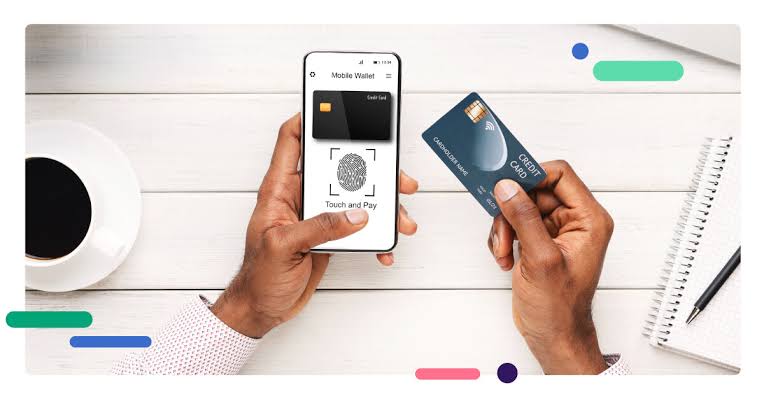
Digital wallets have transformed financial transactions, allowing consumers to pay for groceries, transfer funds, or purchase flight tickets with a simple tap. However, as mobile payments become the standard, cyber threats targeting mobile devices and financial applications have grown increasingly sophisticated. Traditional security measures—such as four-digit PINs, static passwords, and SMS-based two-factor authentication (2FA)—are no longer sufficient to defend against modern attack vectors.
Biometric authentication has emerged as a cornerstone of modern digital wallet security. By linking access directly to an individual's unique biological traits, biometrics bridge the gap between seamless user experience and military-grade protection.
1. The Vulnerabilities of Traditional Authentication
For decades, passwords and Personal Identification Numbers (PINs) served as the primary line of defense for personal accounts. However, knowledge-based credentials carry inherent flaws in a mobile-first world:
- Credential Theft & Phishing: Users frequently reuse passwords across multiple services. If a database is breached elsewhere, attackers can execute credential stuffing attacks on payment platforms.
- Shoulder Surfing: In crowded public places, observers can easily record a user typing a PIN or unlock pattern into their device.
- SMS Interception: Text-message-based verification codes are vulnerable to SIM-swapping schemes and SS7 network exploits, rendering traditional 2FA unreliable for high-value financial transfers.
Biometric authentication removes the "something you know" reliance and replaces it with "something you are," eliminating the risk of forgotten or stolen credentials.
2. Key Biometric Modalities in Mobile Payments
Modern digital wallets leverage multiple biological verification methods, often blending them to create robust defense systems.
Fingerprint Recognition
Fingerprint sensors evaluate the unique ridges, valleys, and minutiae points on a user's finger. Advanced ultrasonic sensors map 3D contours, making spoofing with 2D images or gel molds extremely difficult.
Facial Recognition & 3D Depth Sensing
Unlike legacy camera-based face matching, modern smartphone facial recognition uses infrared dot projectors and time-of-flight (ToF) sensors to build a high-resolution 3D mesh of the user's face. This ensures that a photo or video screen cannot fool the system.
Behavioral Biometrics
A newer layer of security monitors background interaction patterns rather than physical structure. Behavioral biometrics evaluate variables such as:
- Typing speed and key rhythm
- Device hold angle and screen pressure
- Swipe velocity and touch gesture trajectories
If an unauthorized party gains access to an unlocked phone, anomalous behavior patterns trigger an instant re-authentication prompt before any funds can leave the wallet.
3. How Architecture Protects Biometric Data: On-Device Secure Enclaves
A common misconception is that digital wallet providers store users' fingerprints or facial scans in cloud databases. In reality, modern mobile operating systems utilize strict on-device isolation architectures to protect biometric data.
+-------------------------------------------------------------------+
|                        MOBILE OS APPLICATION LAYER                 |
|                                                                   |
|   [ Digital Wallet App ] ---- (Requests Authentication) --->     |
+-------------------------------------------------------------------+
                                   |
                                   v
+-------------------------------------------------------------------+
|                        SECURE HARDWARE LAYER                      |
|                                                                   |
|   [ Secure Enclave / TEE ]                                        |
|   ├── Stores Biometric Template (Encrypted Hash)                 |
|   ├── Sensor captures live trait & performs local comparison       |
|   └── Outputs ONLY: Yes / No (Cryptographic Token)                |
+-------------------------------------------------------------------+
- Local Template Hashing: When you enroll your fingerprint or face, the raw image is never saved. Instead, the hardware mathematically converts the physical data into an encrypted mathematical template.
- Hardware Isolation: The template is locked inside a dedicated, tamper-resistant chip—known as a Secure Enclave (iOS) or Trusted Execution Environment / TEE (Android). This environment is physically separated from the main processor and operating system.
- Cryptographic Validation: When a payment app requests authentication, the operating system asks the Secure Enclave to verify the user. The app receives only a cryptographic "Yes" or "No" token; it never gains access to the underlying biometric data.
Even if a malicious app gains root access to a smartphone's operating system, it cannot extract raw biometric information from the isolated hardware processor.
4. Anti-Spoofing and Liveness Detection
Early implementations of biometric systems were occasionally susceptible to spoofing using high-resolution photographs or 3D masks. Today’s digital wallets integrate advanced liveness detection to ensure the biometric sample originates from a living human present at the moment of transaction.
- Active Liveness: Requires the user to perform an action, such as blinking, smiling, or turning their head.
- Passive Liveness: Uses algorithms to analyze subconscious signals, such as micro-expressions, skin texture reflections, blood flow variations (photoplethysmography), and pupil light responses.
Liveness detection operates within milliseconds during a transaction, keeping authentication fast while blocking sophisticated presentation attacks.
5. Security & Usability Comparison
| Security Dimension | Passwords / PINs | SMS 2FA | Biometric Authentication |
| Resistance to Phishing | Low | Medium | Very High |
| Protection Against Theft | Low (Shoulder Surfing) | Medium (SIM Swap risk) | High (Unique to user) |
| Transaction Speed | Slow (Manual entry) | Moderate (Wait for SMS) | Instant (< 1 second) |
| User Friction | High (Cognitive load) | Moderate | Very Low |
| Risk of Credential Loss | High (Forgetfulness) | Low | None |
6. Regulatory Frameworks and Compliance
Financial regulators worldwide have recognized the necessity of strong authentication for mobile commerce:
- PSD2 / SCA in Europe: The Revised Payment Services Directive mandates Strong Customer Authentication (SCA) for electronic payments. Biometrics satisfy the "inherence" requirement, serving as a primary mechanism for compliant checkouts.
- FIDO2 Standards: Fast Identity Online (FIDO) protocols allow users to leverage biometric hardware for online authentication without sending passwords or biometric templates over the network, drastically reducing large-scale data breach risks.
Conclusion
Biometric authentication represents a fundamental shift in how digital wallets verify identity. By combining hardware-level encryption, multi-modal sensing, and real-time liveness detection, biometrics provide a multi-layered defense system that vastly exceeds traditional passwords in both security and convenience. As cyber threats evolve, the integration of behavioral biometrics and decentralized identity frameworks will ensure digital wallets remain a safe, resilient foundation for modern global commerce.
Related