
Digital Wallets vs. Traditional Banking: The Future of Managing Your Money

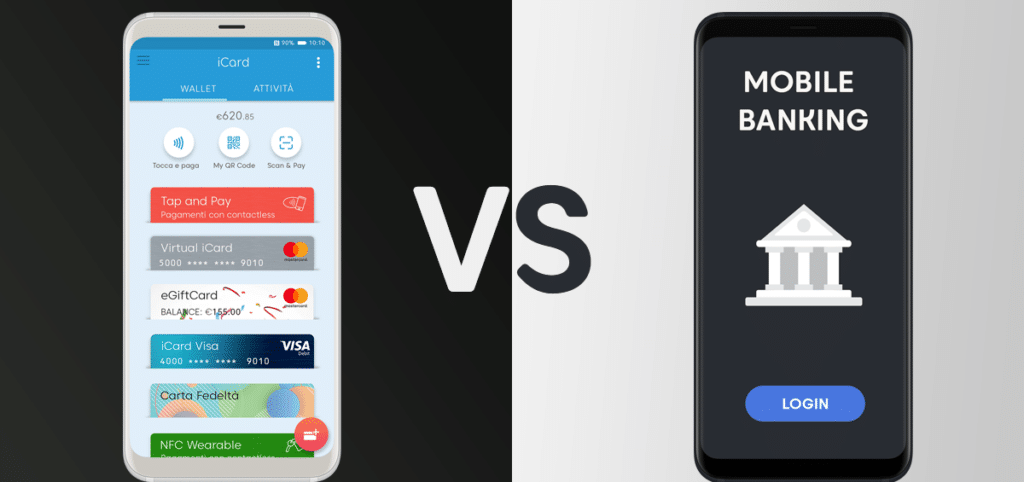
The financial landscape is undergoing a monumental shift. Not too long ago, managing your money meant walking into a brick-and-mortar building, waiting in line, and speaking with a teller. Today, billions of people manage their entire financial lives with a few taps on a smartphone.
The rise of digital wallets (e.g., Apple Pay, Google Wallet, PayPal, and Venmo) has challenged the long-standing dominance of traditional banking methods (e.g., checking accounts, physical debit/credit cards, and wire transfers). But is the traditional bank completely obsolete, or do digital wallets simply offer a flashy layer of convenience?
To help you navigate this evolving ecosystem, this article breaks down the core differences, pros, cons, and security measures of both financial tools, helping you decide how to best optimize your financial strategy.
What is a Digital Wallet?
A digital wallet, or e-wallet, is a software-based system that securely stores a user’s payment information and passwords for numerous payment methods and websites. By using technologies like Near Field Communication (NFC) and QR codes, digital wallets allow users to make purchases using their smartphones, smartwatches, or tablets.
Key Types of Digital Wallets:
- Pass-through Wallets: These store your existing credit or debit cards digitally (e.g., Apple Pay, Google Wallet). When you pay, they pass the card data securely to the merchant.
- Staged Wallets: These act as an intermediary account where you can hold a balance, link a bank account, or pay via an internal system (e.g., PayPal, Venmo).
What is Traditional Banking?
Traditional banking refers to established financial institutions regulated by central banking authorities. They offer comprehensive financial services, including physical branches, checking and savings accounts, loans, mortgages, and investment advice. While most traditional banks now offer robust mobile apps, their underlying infrastructure still relies on legacy banking networks like ACH (Automated Clearing House) or SWIFT for international transfers.
Head-to-Head Comparison: Features and Usability
To truly understand how these two systems stack up, we need to compare them across several critical categories: convenience, speed, accessibility, and financial services.
| Feature | Digital Wallets | Traditional Banking |
|---|---|---|
| Transaction Speed | Instant / Real-time | 1 to 5 business days (standard) |
| Physical Dependency | Smartphone/Device only | Physical cards, cash, ID |
| Global Acceptance | High (where contactless/online is supported) | Universal (via physical visa/mastercard networks) |
| Core Services | Payments, peer-to-peer (P2P) transfers | Loans, mortgages, high-yield savings, wealth management |
| Regulatory Protection | Varies (often relies on underlying card/bank) | High (FDIC/national insurance up to legal limits) |
1. Convenience and User Experience
Digital wallets win handily when it comes to day-to-day convenience. There is no need to carry a bulky physical wallet filled with plastic cards and cash. If you have your phone or smartwatch, you can buy groceries, pay for a taxi, or send money to a friend instantly.
Traditional banking, even with mobile apps, often requires more steps. For example, writing a check or setting up a new payee via a bank transfer usually involves entering lengthy routing and account numbers.
2. Transaction Speed and P2P Transfers
If you have ever tried to split a restaurant bill using a traditional bank transfer, you know the frustration of waiting days for the funds to clear. Digital wallets revolutionized Peer-to-Peer (P2P) payments. Sending money via Venmo or Cash App happens in seconds. Traditional banks have attempted to counter this with services like Zelle, but digital wallets remain the preferred choice for casual, instant transfers.
3. Financial Depth and Services
This is where traditional banks hold their ground. Digital wallets are primarily tools for spending and moving money, not growing or borrowing it.
Traditional banks offer a full suite of financial products:
- Mortgages and auto loans.
- Business lines of credit.
- Certificates of Deposit (CDs) and High-Yield Savings Accounts (HYSAs).
- Personalized financial advising.
While some digital wallets now offer micro-loans or basic savings yields, they cannot match the robust capital and regulatory framework of a traditional commercial bank.
The Security Debate: Which is Safer?
Security is the number one concern for consumers when choosing where to keep their hard-earned money. Interestingly, both methods offer high levels of security, but they protect you in completely different ways.
How Digital Wallets Protect You: Tokenization
Many consumers fear that losing their phone means losing their money. In reality, digital wallets are often safer than physical cards. They use a process called tokenization.
How it works: When you upload a credit card to a digital wallet, the app does not store your actual card number. Instead, it generates a unique, randomized number called a "token." When you make a purchase, the merchant only sees this token. If the merchant’s database is hacked, your actual financial data remains completely safe. Furthermore, digital wallets require biometric authentication (FaceID, fingerprint) or a PIN to authorize any transaction.
How Traditional Banks Protect You: Regulation and Insurance
Traditional banks excel in institutional security and consumer protection. In the United States, for example, banks are backed by the Federal Deposit Insurance Corporation (FDIC), which guarantees your deposits up to $250,000 per depositor, per institution, if the bank fails.
Furthermore, traditional credit cards offer robust fraud protection laws (such as the Fair Credit Billing Act), ensuring you are not held liable for unauthorized charges. While digital wallets often inherit these protections if linked to a credit card, keeping a cash balance directly inside a standalone digital wallet app may not offer the same level of FDIC insurance.
Pros and Cons at a Glance
Digital Wallets
- Pros: Ultra-fast transactions, no need for physical cards, enhanced privacy via tokenization, streamlined online shopping.
- Cons: Dependent on battery life and internet connectivity; not all small businesses accept contactless payments; limited access to cash withdrawals (ATMs).
Traditional Banking
- Pros: Comprehensive financial services (loans, mortgages), high-level government insurance (FDIC), physical branches for face-to-face customer service, universally accepted.
- Cons: Slower transaction processing times, potential for hidden monthly maintenance fees, vulnerability to physical card theft/skimming.
The Verdict: Coexistence, Not Competition
The debate between digital wallets and traditional banking is not a matter of choosing one over the other. Instead, the modern financial ecosystem functions best when they are used in tandem.
Digital wallets function as the ultimate front-end interface. They make daily transactions faster, safer, and incredibly convenient. Traditional banks serve as the ultimate financial foundation, offering the security, regulatory backing, and lending power needed for long-term wealth management.
For the average consumer, the smartest strategy is to link your trusted, secure traditional bank accounts to a reputable digital wallet. This allows you to enjoy the cutting-edge speed of modern fintech without sacrificing the peace of mind and depth of service that only a traditional bank can provide.
Related