
How Digital Wallets Are Revolutionizing Financial Transactions

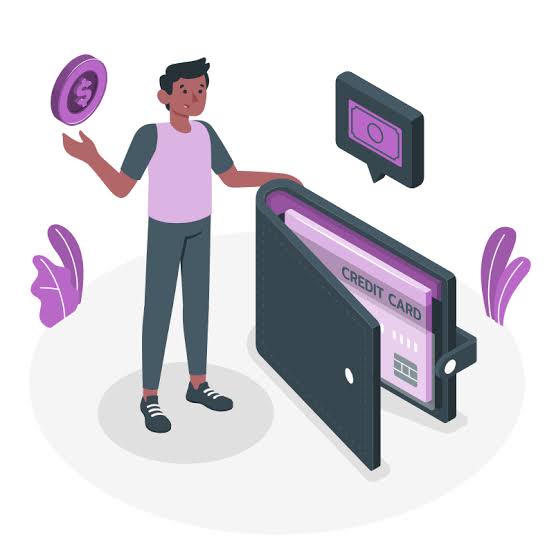
The way humans exchange value has continually evolved—from bartering goods and minting metal coins to swiping plastic cards. Today, we are witnessing one of the most profound shifts in economic history: the transition to a mobile-first, software-driven financial ecosystem. At the epicenter of this transformation is the digital wallet (or e-wallet), an innovation that is redefining convenience, security, and global accessibility in financial transactions.
digital wallets have expanded from basic storage apps for payment cards into multi-faceted platforms that process trillions of dollars globally. Understanding how digital wallets are reshaping commerce offers a clear glimpse into the future of money.
1. What Is a Digital Wallet?
At its core, a digital wallet is an application or electronic device that securely stores a user's payment information—such as debit cards, credit cards, bank account credentials, or digital assets like cryptocurrencies and loyalty points.
By leveraging technologies like Near Field Communication (NFC), Quick Response (QR) codes, and Application Programming Interfaces (APIs), digital wallets allow users to complete transactions with a simple tap, glance, or click.
Popular platforms fall into several categories:
- Pass-Through Wallets: Solutions like Apple Pay and Google Pay that encrypt and store existing credit/debit card data to make in-store contactless or online purchases.
- Stored-Value Wallets: Platforms like PayPal, Venmo, or Alipay that allow users to hold funds directly within the digital wallet ecosystem.
- Account-to-Account (A2A) Systems: Networks like India's UPI or Brazil's Pix that link directly to bank accounts for instant payment routing.
2. Key Pillars of the Digital Wallet Revolution
The rapid adoption of digital payment platforms is driven by four core advantages over traditional banking and cash systems:
      +-------------------------------------------------------+
      |               DIGITAL WALLET ADVANTAGES               |
      +-------------------------------------------------------+
        |                  |                 |               |
        v                  v                 v               v
  [Speed & Ease]   [Top Security]    [Financial]    [Super-App]
  Instant Taps,    Tokenization &    Inclusion for   Ecosystems &
  1-Click Check    Biometrics        Unbanked        Loyalty Rewards
A. Frictionless Convenience and Speed
Traditional checkout methods require carrying physical cards, entering lengthy account numbers, or waiting for physical cash change. Digital wallets eliminate these barriers. Through biometric authentication (such as fingerprint scanning or facial recognition), a user can approve a purchase in seconds. Online, "one-click" checkout integrations dramatically reduce shopping cart abandonment rates for merchants.
B. Enterprise-Grade Security
A common concern among new users is whether storing financial details on a smartphone is safe. Paradoxically, digital wallets are significantly more secure than physical cards. They rely heavily on tokenization—a process where sensitive account numbers are replaced with a unique set of randomized numbers (tokens) during a transaction.
How Tokenization Works: If a merchant’s payment database experiences a breach, hackers only intercept single-use encrypted tokens, leaving your actual credit card and bank account numbers completely hidden and safe.
Furthermore, built-in features like two-factor authentication (2FA), remote device locking, and real-time fraud monitoring via artificial intelligence ensure that lost smartphones rarely lead to stolen funds.
C. Financial Inclusion for the Unbanked
In many developing regions, establishing brick-and-mortar bank branches is economically unfeasible. However, mobile smartphone adoption has skyrocketed worldwide. Digital wallets bridge this gap by enabling millions of previously unbanked individuals to participate in the formal economy without needing a traditional bank account. Users can receive payments, build credit histories, micro-invest, and transfer money across borders with minimal fees.
D. The Evolution of "Super-Apps"
In markets across Asia, Latin America, and Africa, digital wallets have evolved beyond payments into all-in-one digital platforms known as Super-Apps. Platforms like WeChat Pay, Grab, or Mercado Pago integrate payment systems directly with food delivery, ride-hailing, insurance, e-commerce, and instant messaging. This creates an interconnected digital environment where transactions happen naturally within daily software interactions.
3. Impact Across Industries
The widespread transition away from physical cash affects multiple sectors:
| Sector | How Digital Wallets Transform Operations |
| E-Commerce | Streamlines checkout flows, increases conversion rates, and enables Buy Now, Pay Later (BNPL) integrations at checkout. |
| Brick-and-Mortar Retail | Speeds up checkout lines, cuts cash-handling overhead, and automatically links customer purchases with rewards/loyalty programs. |
| Public Transit | Replaces paper tickets and transit cards with tap-to-ride phone check-ins in major worldwide metro systems. |
| Peer-to-Peer (P2P) | Eliminates the need for exact cash when splitting restaurant bills, paying freelancers, or sending money to family. |
4. Challenges and Potential Obstacles
Despite exponential growth, the digital wallet ecosystem faces several ongoing challenges:
- Cybersecurity Risks and Phishing: While tokenization secures data transmission, malicious actors actively target end-users through social engineering, phishing scams, and malware.
- Infrastructure Dependence: Digital payments require stable internet connectivity and battery power. Outages or hardware failures can disrupt commerce in heavily digitized societies.
- Regulatory Compliance: Fragmented regulations across different regions make cross-border digital payments complex, requiring platforms to navigate diverse data privacy laws (such as GDPR) and Anti-Money Laundering (AML) standards.
The Road Ahead
Digital wallets are no longer a futuristic alternative to cash—they are becoming the primary infrastructure of global commerce. Looking ahead, trends like agentic AI transactions (where AI assistants execute approved transactions on your behalf), biometric-only checkouts, and digital identity integration (storing driver’s licenses and passports alongside payment cards) will blur the lines between identity and money.
For consumers and businesses alike, adapting to this digital payment era is no longer optional; it is the fundamental cornerstone of modern commerce.
Related