
Digital Wallet Innovations Transforming Financial Technology

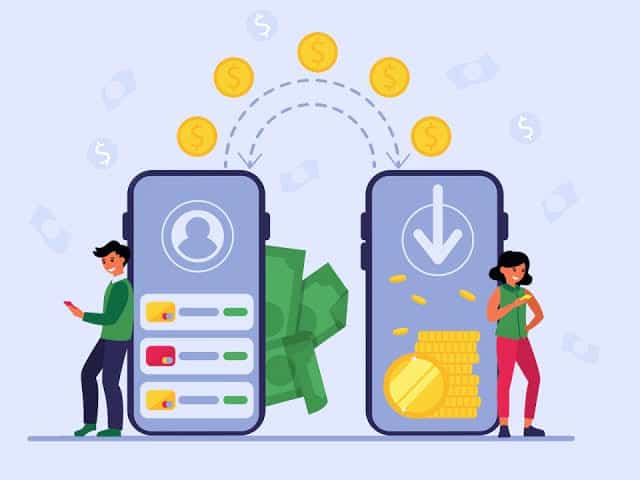
The financial technology (fintech) landscape is undergoing a massive shift. What started as a basic tool to digitize credit cards has evolved into the cornerstone of global commerce. Digital wallets are no longer just software replicas of leather bi-folds; they have become intelligent, interconnected hubs that manage identity, facilitate cross-border trade, and enable autonomous transactions.
Globally, digital wallets account for more than half of online spending and a third of in-person retail transactions, solidifying their position as the world's leading payment method. Driven by breakthroughs in Artificial Intelligence (AI), blockchain technology, and regulatory changes, several key innovations are actively reshaping how we move, store, and conceptualize money.
1. The Rise of "Agentic Commerce" and AI-Driven Payments
The intersection of Generative AI and fintech has unlocked a new paradigm: agentic commerce. Traditional digital wallets require manual authorization—a fingerprint, a PIN, or a swipe. Modern wallets are preparing for a future where AI agents act as autonomous financial proxies for consumers.
Agentic Commerce: An ecosystem where validated AI virtual assistants make purchasing and payment decisions on behalf of users, utilizing highly secure, tokenized credentials.
Imagine an AI agent monitoring your household grocery usage, recognizing you are out of olive oil, comparing prices across various merchants, and executing the purchase. The transaction is handled entirely within the background of the digital wallet using secure tokenization. To support this, leading payment networks are developing cryptographic validation standards (such as Web Bot Auth) to distinguish between a legitimate consumer-facing AI agent and a malicious bot attack.
2. Universal Digital Identity: Wallets Beyond Currency
As digital wallets mature, they are expanding their utility to integrate identity verification. In many regions, the separation between financial wallets and government-issued identification is dissolving.
Through decentralized identity frameworks and zero-knowledge proofs (cryptographic methods that prove a statement is true without revealing the underlying data), digital wallets can now securely store:
- Passports and national ID cards
- Driver's licenses and transit passes
- Medical records and insurance cards
- Cryptographic keys and access credentials
By marrying digital identity with payment capabilities, checkouts become faster and more secure. A consumer purchasing an age-restricted item online no longer needs to upload a photo of their physical ID; the digital wallet can cryptographically verify their age without sharing their full name or birthdate.
3. Account-to-Account (A2A) and Instant Payment Rails
For a long time, digital wallets in card-led markets like the US and UK served as digital containers for credit and debit cards. However, a globally growing segment of wallets connects directly to instant, bank-based payment rails, bypassing traditional card networks altogether.
This A2A movement is powered by regional real-time payment frameworks:
| Country/Region | Real-Time Payment Framework | Primary Wallet Integration |
| India | Unified Payments Interface (UPI) | PhonePe, Google Pay, Paytm |
| Brazil | Pix | Mercado Pago, PicPay |
| United States | FedNow / RTP | Emerging Neobank and Fintech Wallets |
| Europe | SEPA Instant Credit Transfer | Revolut, N26, Local Banking Apps |
By linking directly to a bank account, these wallets reduce transaction fees for merchants and provide consumers with instant settlement. This shifts the operational focus from credit cards to real-time liquid assets.
4. Stablecoins and Fiat-to-Crypto Interoperability
While traditional cryptocurrencies remain volatile investment assets, stablecoins—cryptocurrencies pegged directly to a fiat currency like the US Dollar—have found a functional home inside digital wallets.
Regulatory milestones in major markets have given enterprises the confidence to build stablecoin settlement systems directly into their payment ecosystems. Rather than relying on slow, expensive international wire networks, cross-border digital wallets use stablecoins to execute multi-currency settlements instantly, at a fraction of the traditional cost.
For the average user, this infrastructure operates quietly behind the scenes. They might pay in USD from their digital wallet, which is converted to a stablecoin for instant cross-border routing, and settled in the recipient's local currency—all within seconds.
5. Superapps and the Rise of Embedded Finance
In regions like Asia-Pacific and Latin America, digital wallets are evolving into "superapps"—all-in-one mobile applications that bundle financial services, messaging, e-commerce, and ride-hailing into a single interface.
┌──────────────────────────────────────────────────────────┐
│                      THE SUPERAPP                        │
├────────────────────────────┬─────────────────────────────┤
│      Core Financials       │      Lifestyle Services     │
│  • Instant Peer-to-Peer    │  • E-Commerce Marketplaces  │
│  • Micro-Lending & Credit  │  • Ride-Hailing & Transit   │
│  • Multi-Currency Wallets  │  • Food Delivery & Booking  │
└────────────────────────────┴─────────────────────────────┘
This phenomenon relies on embedded finance, which integrates financial services directly into non-financial digital platforms. Consumers can apply for microloans, buy insurance policies, or access Buy Now, Pay Later (BNPL) plans at the exact moment they purchase a product—all managed seamlessly through the app's native wallet.
6. Biometric Security and Passwordless Authentication
As digital transaction volumes surge, fraud mitigation remains a top priority. Traditional passwords and SMS-based two-factor authentication (2FA) are increasingly vulnerable to phishing and social engineering attacks.
To counteract this, modern digital wallets are moving toward biometric passwordless authentication. Utilizing FIDO2 standards and device-native biometrics (like facial recognition and fingerprint scanning), wallets create unique, localized cryptographic handshakes for every transaction.
By shifting from what you know (passwords) to what you are (biometrics), digital wallets provide a highly secure environment that reduces checkout friction and builds consumer trust.
Looking Ahead
The digital wallet has outgrown its original role as a convenient replacement for plastic cards. Today, it is an advanced financial operating system. By combining autonomous AI capabilities, cross-border payment rails, instant stablecoin settlements, and secure digital identities, these innovations are laying the groundwork for a more connected, efficient, and inclusive global economy.
Related