
How Mobile Wallets Are Replacing Traditional Payments

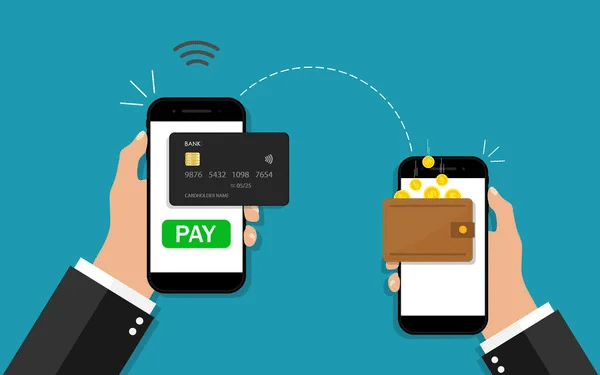
The way we handle money is undergoing a massive, irreversible shift. Just a couple of decades ago, leaving the house without a physical wallet stuffed with paper cash and plastic credit cards was a recipe for a stressful day. Today, millions of people walk out the door carrying nothing but a smartphone.
Mobile wallets—smart applications like Apple Pay, Google Wallet, Samsung Wallet, and regional giants like Alipay and Pix—have evolved from a tech-savvy novelty into a dominant force in global commerce. This article explores how mobile wallets are systematically dismantling traditional payment infrastructures, the technology driving this change, and what the future holds for a increasingly cashless society.
1. The Anatomy of a Shift: From Leather to Pixels
To understand why traditional payments are fading, we have to look at what mobile wallets actually replace. Traditional payment systems rely on physical intermediates: banknotes, coins, and magnetic stripe or EMV chip plastic cards. Each of these carries inherent friction. Cash requires manual counting, making change, and physical security. Cards require carrying a physical holder, remembering PINs, and dealing with wear and tear.
Mobile wallets consolidate all of these tools into a single, digital ecosystem. By linking debit cards, credit cards, bank accounts, and even loyalty points to a smartphone or smartwatch, they eliminate the need for physical storage.
According to recent market reports, global mobile payment adoption has crossed critical thresholds, with digital wallets now accounting for over 50% of global e-commerce transaction value and rapidly catching up in point-of-sale (POS) physical retail.
2. The Core Technologies Driving the Revolution
The rapid rise of mobile wallets is not an accident; it is built on a foundation of secure, high-speed technologies that make paying easier than fishing a card out of a pocket.
Near Field Communication (NFC)
NFC is the technology that powers "contactless" payments. It allows two devices—like your phone and a retail payment terminal—to communicate wirelessly over a very short distance (usually a few centimeters). When you hold your phone near a terminal, the payment data is transmitted instantly.
Quick Response (QR) Codes
While Western markets heavily favor NFC, QR codes have revolutionized payments across Asia and Latin America. Merchants simply display a printed QR code, and consumers scan it using their phone's camera to transfer funds instantly. This technology has incredibly low barriers to entry, allowing even street vendors to accept digital payments without buying expensive card terminals.
Tokenization and Biometrics
The biggest hurdle for mobile wallets was initially trust. How do you convince someone that storing their life savings on a phone is safe? The answer lies in tokenization.
When you load a card into a mobile wallet, the actual card number is never stored on the device or shared with the merchant. Instead, it is replaced with a unique, randomized string of numbers called a "token." Even if a hacker intercepts the transaction, the token is completely useless to them. Combined with biometric authentication (Face ID or fingerprint scanning), mobile wallets are mathematically and practically more secure than swiping a traditional credit card.
3. Why Consumers and Businesses Are ditching Cash and Plastic
The transition to mobile wallets is fueled by a mutual benefit structure: both buyers and sellers get a better deal.
For Consumers: Unmatched Convenience and Rewards
- Speed: An NFC or QR payment takes a fraction of the time compared to inserting a chip card and waiting for approval, or counting out paper bills.
- Consolidation: Beyond money, modern mobile wallets hold digital keys, boarding passes, event tickets, and health insurance cards.
- Integrated Budgeting: Many wallet apps automatically categorize spending, providing instant feedback on where your money goes.
- Gamified Rewards: Many digital wallets offer instant cashback, discounts, or loyalty points directly within the app, bypassing traditional mail-in rewards or complex credit card points portals.
For Businesses: Higher Conversion and Lower Overhead
- Reduced Friction: In e-commerce, "cart abandonment" is a massive problem. If a customer has to get up, find their wallet, and type in a 16-digit card number, they might change their mind. Mobile wallets allow for "one-click" checkouts using biometrics, drastically increasing sales.
- Lower Hardware Costs: As mentioned with QR codes, small businesses can accept digital payments without paying monthly fees for bulky card machines.
- Data Insights: Digital transactions provide merchants with cleaner data on consumer behavior, allowing them to optimize stock and run hyper-targeted, digital-first loyalty programs.
4. The Global Landscape: A Tale of Two Systems
The replacement of traditional payments does not look the same everywhere. The world has split into two distinct mobile wallet adoption models.
| Region | Primary Driver | Dominant Technology | Key Examples |
| North America & Europe | Card-first evolution | NFC (Contactless) | Apple Pay, Google Wallet |
| Asia & Latin America | Mobile-leapfrogging | QR Codes & Instant Bank Transfers | Alipay, WeChat Pay, Pix |
In developed Western economies, consumers were already heavily reliant on credit cards. Therefore, mobile wallets like Apple Pay acted as a digital "skin" over the existing card infrastructure.
Conversely, in regions like China, India, and Brazil, vast portions of the population were unbanked or underbanked when the smartphone boom occurred. These regions skipped the plastic card phase entirely, moving directly from cash to mobile-first instant payment networks. For example, Brazil's Central Bank-backed Pix system or India's UPI have effectively marginalized traditional banking payment methods in just a few short years.
5. Challenges on the Horizon
Despite the incredible momentum, the total elimination of traditional payments faces several real-world bottlenecks.
The Digital Divide
Not everyone owns a high-end smartphone, and not every area has reliable internet access. If a society goes 100% cashless, it risks disenfranchising elderly populations, low-income individuals, and rural communities who rely on physical legal tender.
Cybersecurity Risks
While tokenization makes day-to-day transactions secure, mobile wallets open up new vectors for financial crime. Phishing scams, device theft combined with social engineering, and malware targeting financial apps are on the rise.
Geopolitical and Systemic Vulnerabilities
Traditional cash works even when the power goes out. A fully digital financial ecosystem is vulnerable to massive server outages, cyber warfare, and grid failures. If a nation's central payment gateway goes down, commerce grinds to a complete halt.
6. Conclusion: The Cashless Destination
Are traditional payments dead? Not quite yet, but they are definitively on life support. Cash will likely linger for years as a fallback system and a tool for privacy, but its role as the default medium of exchange is over.
Plastic credit cards are next in line for obsolescence, slowly transforming into purely digital accounts managed via cloud wallets. As wearable tech improves and biometrics become even more integrated into our daily lives, the act of "paying" will become practically invisible—a seamless background process confirmed with a glance or a touch. The mobile wallet isn't just replacing traditional payments; it is redefining the very nature of economic transactions.
Related