
Understanding Malware, Ransomware, and Phishing Attacks: A Comprehensive Guide for 2026

In the rapidly evolving digital landscape of 2026, the intersection of Artificial Intelligence (AI) and cybercrime has made understanding digital threats more crucial than ever. For individuals and businesses alike, the terminology can often feel like an overwhelming "alphabet soup." However, the majority of cyberattacks fall into three primary categories: Malware, Ransomware, and Phishing.
While they often work in tandem, each has distinct characteristics, delivery methods, and defense strategies. This guide provides a deep dive into these threats to help you build a more resilient digital defense.
1. Malware: The Umbrella of Malicious Software
The term Malware is a portmanteau of "malicious software." It serves as a broad umbrella term for any code or application developed with the intent to damage, disrupt, or gain unauthorized access to a computer system.
Common Types of Malware
- Viruses and Worms: These are self-replicating programs. While a virus needs a host file to spread, a worm can travel across networks independently, exploiting security vulnerabilities.
- Trojans: Named after the Greek myth, these disguise themselves as legitimate software to trick users into installing them.
- Spyware and Keyloggers: These operate silently in the background, monitoring your activity or recording every keystroke to steal passwords and financial data.
- Fileless Malware: A more modern threat that doesn't install files on your disk but operates directly in the computer's memory (RAM), making it incredibly difficult for traditional antivirus software to detect.
2. Ransomware: The Digital Extortionist
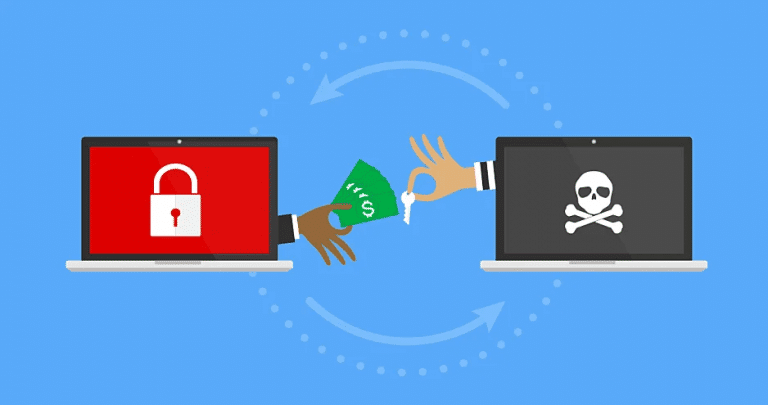
Ransomware is a specific, highly destructive subtype of malware. Its sole purpose is financial extortion. Instead of just stealing data, ransomware locks the user out of their own files through high-level encryption.
How a Ransomware Attack Unfolds
- Infiltration: The malware enters the system (often through a phishing email).
- Encryption: It quietly encrypts sensitive files (documents, photos, databases) using a cryptographic key known only to the attacker.
- The Ransom Note: A message appears on the screen demanding payment—usually in cryptocurrency like Bitcoin—in exchange for the decryption key.
- Double Extortion: In 2026, "Double Extortion" has become the standard. Attackers not only encrypt the data but also steal a copy. They threaten to leak sensitive information publicly if the ransom isn't paid, even if the victim has backups to restore their system.
Important Note: Security experts and law enforcement (such as the FBI) generally advise against paying the ransom. There is no guarantee that the criminals will provide the key, and payment only funds future criminal activity.
3. Phishing: The Art of Human Deception
While Malware and Ransomware are technical tools, Phishing is a form of Social Engineering. It targets the "human operating system" rather than the computer's software.
Phishing involves the use of fraudulent communications (emails, SMS, or phone calls) that appear to come from a reputable source, such as a bank, a government agency, or a colleague.
The Evolution of Phishing in 2026
- Spear Phishing: Highly targeted attacks where the criminal researches the victim to make the message incredibly personal and convincing.
- Vishing and Smishing: Phishing via voice calls (often using AI-driven voice cloning) or SMS text messages.
- Business Email Compromise (BEC): An attacker poses as a high-level executive or vendor to trick an employee into transferring large sums of money.
- AI-Enhanced Phishing: Modern attackers use Large Language Models (LLMs) to generate perfect, error-free emails in any language, removing the "poor grammar" red flags we used to rely on for detection.
[Image showing the anatomy of a phishing email]
The Intersection: How They Work Together
It is rare to see these attacks in isolation. A typical modern cyberattack often follows this lifecycle:
- The Hook (Phishing): You receive a convincing email about a "missed delivery."
- The Payload (Malware): Clicking the link downloads a "tracking document" which is actually a Trojan.
- The End Game (Ransomware): The Trojan installs ransomware that encrypts your entire company network.
Best Practices for Prevention and Protection
To protect yourself in this high-threat environment, a "Defense in Depth" strategy is essential. No single tool is 100% effective.
1. Robust Identity Management
- Multi-Factor Authentication (MFA): This is the single most effective deterrent. Even if an attacker steals your password through phishing, they cannot access your account without the second factor (like a hardware key or a push notification).
- Passkeys: Move toward passwordless authentication where possible, as passkeys are significantly more resistant to phishing than traditional passwords.
2. Technical Safeguards
- Regular Updates: Set your software and operating systems to "Auto-Update." Many malware attacks exploit "Zero-Day" vulnerabilities that have already been patched by the manufacturer.
- Endpoint Protection: Use modern EDR (Endpoint Detection and Response) tools rather than just basic antivirus. These use AI to spot suspicious behavior rather than just looking for known "signatures."
3. Data Resilience
- The 3-2-1 Backup Rule: Maintain 3 copies of your data, on 2 different media types, with 1 copy stored offline (air-gapped). Offline backups are the only sure way to recover from ransomware without paying.
4. Continuous Education
Cybersecurity is not a "set it and forget it" task. Staying informed about the latest tactics—such as AI-generated deepfakes used in vishing—is the best way to remain vigilant.
Conclusion
The digital world offers immense opportunities, but it requires a foundation of security. By understanding that Malware is the tool, Ransomware is the extortion tactic, and Phishing is the delivery method, you can better categorize the risks you face daily.
Cyber-resilience in 2026 isn't about being unhackable; it's about being prepared, staying skeptical of unsolicited communications, and having the right systems in place to recover if things go wrong.
Related