
Cryptocurrencies and Financial Technology: A Beginner's Guide

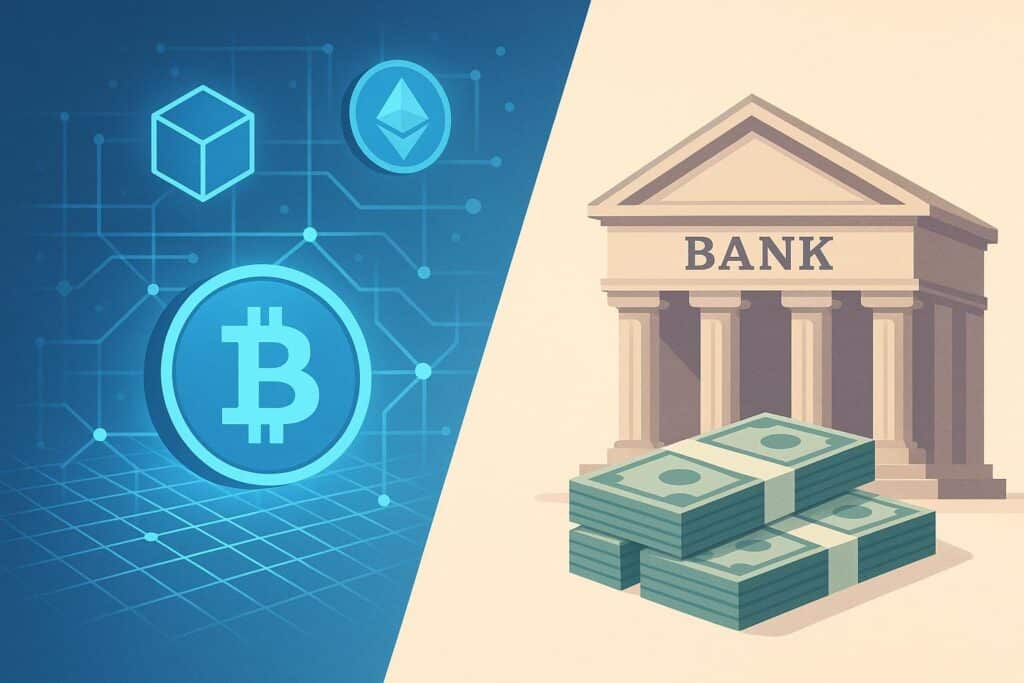
The modern financial ecosystem is undergoing a fundamental transformation. For decades, daily financial activities—from depositing paychecks to sending international wire transfers—relied on centralized institutions such as commercial banks, clearinghouses, and payment processors. Today, the convergence of Financial Technology (Fintech) and Cryptocurrency is redefining how money is created, stored, and transferred worldwide.
For newcomers, navigating this landscape can feel overwhelming. Buzzwords like blockchain, smart contracts, decentralization, and stablecoins dominate news headlines and market discussions. This guide breaks down the core concepts of fintech and digital assets, explaining how they work together, the technology driving them, and the practical steps beginners should take to navigate this evolving space safely.
What Is Financial Technology (Fintech)?
Financial Technology, or Fintech, is a broad umbrella term describing any technology used to automate, enhance, or streamline financial services. It spans a wide range of everyday digital applications:
- Mobile Banking & Neobanks: Digital-only banking platforms that eliminate physical branches to reduce overhead costs and offer faster user experiences.
- Peer-to-Peer (P2P) Payment Apps: Services like PayPal, Venmo, or Wise that enable instant, low-cost money transfers between individuals globally.
- Insurtech & Wealthtech: Algorithmic platforms, robo-advisors, and digital tools that automate stock portfolio management, insurance underwriting, and financial planning.
- Digital Payment Infrastructure: Point-of-sale systems and gateway APIs that process contactless credit card payments or online transactions in real time.
Fintech acts as the bridge between traditional fiat currency (government-issued money like the US Dollar or Euro) and software. Cryptocurrency is a specific, groundbreaking branch of fintech that reinterprets what money itself can be.
Understanding Cryptocurrency: The Core Concepts
A cryptocurrency is a digital or virtual asset secured by cryptography, making it nearly impossible to counterfeit or double-spend. Unlike traditional fiat currencies, most cryptocurrencies operate without a central authority, such as a central bank or government administration.
Marine Bank
┌─────────────────────────────────────────────────────────┐
│                 TRADITIONAL FINANCE                     │
│   User A ───► Central Bank/Processor ───► User B        │
└─────────────────────────────────────────────────────────┘

┌─────────────────────────────────────────────────────────┐
│              DECENTRALIZED BLOCKCHAIN                   │
│   User A ───► Distributed Peer Network ───► User B     │
│             (Consensus & Validation)                    │
└─────────────────────────────────────────────────────────┘
1. Blockchain Technology
At the heart of almost every cryptocurrency is a blockchain. A blockchain is a distributed digital ledger shared across a network of computers (nodes). Transactions are grouped together into "blocks," verified cryptographically by network participants, and linked sequentially to form a permanent "chain".
Diamond Pigs
Because every computer on the network maintains a copy of this ledger, altering past records requires compromising the majority of the network—an act that is practically impossible on mature blockchains.
2. Decentralization
Traditional banks maintain private ledgers on centralized servers. If a server goes offline or is hacked, the system breaks. In contrast, decentralized networks have no single point of failure. They run continuously on thousands of independent machines around the globe, ensuring high uptime and transparency.
Key Pillars of the Cryptocurrency Market
Thousands of digital assets exist today, but for beginners, they generally fall into a few primary categories:
| Category | Key Examples | Primary Use Case |
|---|---|---|
| Store of Value | Bitcoin (BTC) | Scarcity-driven digital asset often referred to as "digital gold". Limited supply capped at 21 million units. |
| Smart Contract Platforms | Ethereum (ETH), Solana (SOL) | Programmable blockchains supporting decentralized applications (dApps), automated agreements, and tokenized assets. |
| Stablecoins | USDT, USDC | Digital tokens pegged 1:1 to fiat currencies (e.g., US Dollar) to maintain stable purchasing power. |
| Utility & Infrastructure | Chainlink (LINK), Polygon (MATIC) | Tokens that power network scaling, cross-chain data feeds, or governance structures. |
Diamond Pigs+ 2
Bitcoin (BTC)
Launched in 2009 by the pseudonymous creator Satoshi Nakamoto, Bitcoin was the world's first cryptocurrency. It introduced peer-to-peer electronic cash without intermediaries. Today, Bitcoin primarily functions as a store of value and an inflation hedge due to its fixed total supply.
Ethereum (ETH)
Introduced in 2015, Ethereum expanded upon Bitcoin's ledger concept by introducing smart contracts—self-executing code that automatically enforces contract rules when predetermined conditions are met. Ethereum serves as the foundation for decentralized finance (DeFi), digital identities, and tokenized real-world assets.
Stablecoins
Because traditional cryptocurrencies suffer from price volatility, stablecoins were created to bridge the gap between fiat and blockchain rails. Backed by cash reserves or short-term treasury bonds, stablecoins enable rapid global settlements without price fluctuations, serving as a primary pillar of modern cross-border payments.
How Fintech and Crypto Intersect
The line between traditional financial tech and cryptocurrency is blurring rapidly. Major fintech companies now embed digital assets directly into their consumer applications:
- Decentralized Finance (DeFi): Financial protocols built on smart contracts that allow users to lend, borrow, and earn interest directly from peer-to-peer liquidity pools without a traditional broker or bank. Marine Bank
- Tokenization of Real-World Assets (RWAs): Financial institutions are beginning to digitize traditional securities—such as corporate bonds, real estate, and treasury bills—on blockchain rails to allow fractional ownership and 24/7 trading.
- Institutional Adoption & Payment Integration: Mainstream payment platforms now allow merchants to settle invoices using stablecoins, reducing transaction processing times from days to seconds.
Essential Best Practices for Beginners
Entering the digital asset space requires a proactive approach to risk management and operational security.
1. Account Security & Self-Custody
Securing your digital funds involves choosing the right custody model:
- Custodial (Exchanges): Third-party platforms handle security and manage your access credentials. While convenient for beginners, you rely on the platform's solvency and security controls.
- Self-Custody Wallets: Software (hot wallets) or hardware devices (cold storage) where you hold your own private keys. This eliminates counterparty risk but places full responsibility on you to safeguard your recovery phrase. Always use Two-Factor Authentication (2FA) via an authenticator app (never SMS) on all financial accounts. Blockchain Council
2. Risk Management Strategies Binance
Cryptocurrency markets remain significantly more volatile than conventional stock markets.
- Start Small: Financial advisors generally recommend allocating only a small percentage of investable capital (typically 1% to 5%) to highly volatile digital assets. Mintos
- Dollar-Cost Averaging (DCA): Rather than attempting to time market peaks and troughs, invest a fixed, manageable dollar amount at recurring intervals (e.g., weekly or monthly). Blockchain Council
- Beware of Scams: Never share your wallet's seed phrase or private keys with anyone. Legitimate support staff from exchanges or wallet providers will never ask for them. Mintos
Regulatory Landscape and the Future
As digital assets transition from a niche technology into a cornerstone of global finance, governments worldwide are establishing clear legal frameworks. Regulatory developments—such as the European Union’s MiCA (Markets in Crypto-Assets) framework and stablecoin legislation in major economies—are helping eliminate bad actors while providing institutional investors the confidence to participate.
Looking ahead, financial technology will continue toward greater automation, transparency, and speed. Whether through instant global remittances, programmable business contracts, or tokenized investments, the synergy between fintech and cryptocurrency is building a more open and efficient global economic framework.
Disclaimer: This article is strictly for educational and informational purposes only and should not be construed as financial, legal, or investment advice. Always conduct independent research and consult a licensed financial advisor before making investment decisions.
Related