
The Role of Artificial Intelligence in Financial Technology: Redefining Modern Finance

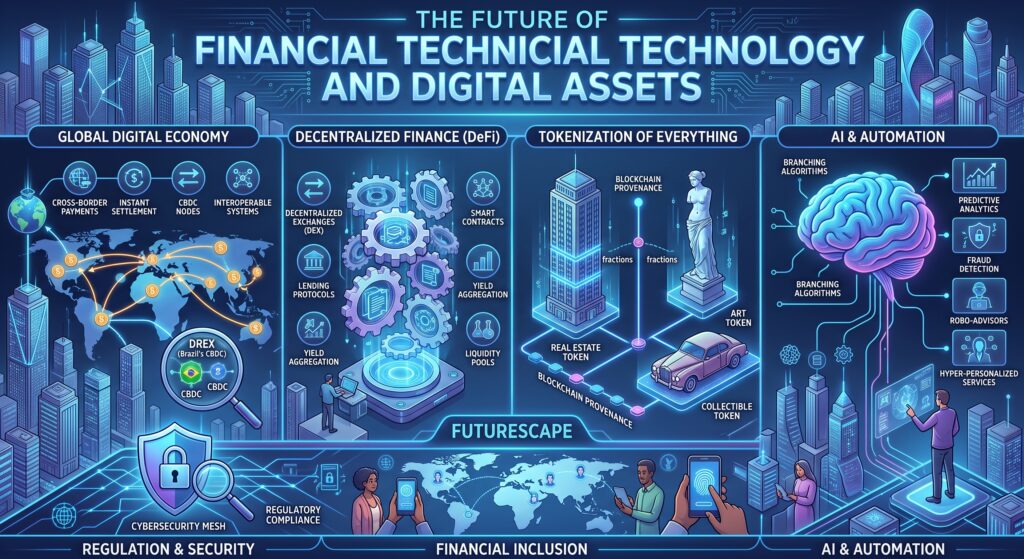
The convergence of Artificial Intelligence (AI) and Financial Technology (FinTech) is no longer a forward-looking forecast—it is the operational backbone of modern financial services. From hyper-personalized retail banking to dynamic algorithmic trading and autonomous fraud mitigation, AI is reshaping how capital is stored, managed, moved, and protected.
As technology matures, the financial industry is shifting from basic automation toward agentic systems and deep context analysis. Understanding the specific mechanisms through which AI powers the fintech ecosystem reveals why this integration is one of the most critical structural transformations in economic history.
1. Smart Risk Assessment and Automated Underwriting
Traditional credit scoring models rely primarily on historical repayment data, salary slips, and rigid bureau scores. While effective for established consumers, this legacy framework frequently excludes "thin-file" individuals—gig workers, immigrants, and young adults with minimal credit history.
AI-driven underwriting changes this dynamic through machine learning algorithms capable of evaluating non-traditional data sets, including:
- Utility and rent payment consistency
- Real-time cash flow and transaction velocities
- E-commerce transactional patterns
- Macroeconomic data points mapped to consumer behavior
By analyzing thousands of variables in milliseconds, financial institutions can model default probabilities with significantly higher accuracy. This yields two main benefits: lower non-performing loan (NPL) ratios for lenders and expanded financial inclusion for underserved demographics.
2. Advanced Fraud Detection and Anti-Money Laundering (AML)
Financial fraud has grown increasingly sophisticated, making static, rules-based security systems obsolete. Traditional setups generate high rates of false positives—blocking legitimate transactions and angering consumers.
[Raw Financial Transaction Stream]
               │
               ▼
┌──────────────────────────────────────────────┐
│  AI Anomaly Engine (Behavioral Baseline)     │
│  - Spatial/Temporal Discrepancy Checks       │
│  - Pattern-Matching Machine Learning Models  │
└──────────────────────┬───────────────────────┘
                       │
             ┌─────────┴─────────┐
             ▼                   ▼
      [Flagged Anomaly]   [Approved & Processed]
             │
             ▼
┌──────────────────────────────────────────────┐
│ Real-Time Neural Network Fraud Assessment   │
└──────────────────────────────────────────────┘
Modern AI systems leverage continuous behavioral profiling. Machine learning models establish a baseline for every user's normal activity—such as typical purchasing hours, geographic coordinates, terminal types, and spending volumes. When an anomaly occurs, the engine flags or halts the transaction in real time.
Furthermore, deep learning models assist compliance teams in identifying complex Anti-Money Laundering (AML) networks by detecting subtle connections across thousands of accounts, shell entities, and international wire transfers that human analysts might oversee.
3. Hyper-Personalized Banking and Agentic Advisors
The era of one-size-fits-all financial products is coming to an end. Machine learning algorithms, combined with Generative AI interfaces, allow fintech platforms to act as dedicated personal CFOs.
| Area | Traditional Fintech Model | AI-Powered FinTech Model |
| Customer Support | Decision-tree chatbots with rigid answers | Conversational AI agents with natural language execution |
| Wealth Management | Periodic rebalancing based on static risk surveys | Dynamic, automated portfolio shifts reacting to market sentiment |
| Budgeting | Static categorizations of past expenses | Predictive cash flow modeling with preventive spending alerts |
| Credit Offers | Standardized interest rates based on credit brackets | Dynamic pricing customized to real-time risk profiles |
These systems process real-time spending behavior to offer proactive financial management. For instance, if an AI engine detects an impending shortfall based on recurring subscription billing and projected income, it can automatically recommend a low-interest short-term credit line or initiate an automated micro-transfer from a savings yield account.
4. Algorithmic Trading and Sentiment Analysis
High-Frequency Trading (HFT) and quantitative funds have utilized algorithms for decades, but modern AI introduces cognitive intelligence to the equation.
Beyond processing numerical price charts, Natural Language Processing (NLP) models monitor unstructured global data feeds, including:
- Corporate earnings reports and SEC filings
- Central bank speeches and rate statements
- Global news headlines and supply chain reports
- Social media sentiment and specialized industry forums
By calculating market sentiment indices in milliseconds, AI-enabled trading platforms execute trades faster than human traders can process a headline. This capability optimizes market liquidity and provides institutional investors with refined hedging mechanisms.
5. Regulatory Technology (RegTech) and Automated Compliance
Financial institutions spend billions annually ensuring compliance with rapidly shifting global regulations. RegTech leverages AI to transform compliance from a reactive, manual burden into an automated, proactive strategy.
- Policy Monitoring: Large Language Models (LLMs) continuously track updates from global regulatory bodies (such as the SEC, FCA, or ECB) and automatically flag potential compliance gaps within an institution’s operational procedures.
- Document Processing: AI extracts, verifies, and indexes data from legal contracts, loan agreements, and Know Your Customer (KYC) documentation, reducing onboarding times from days to seconds.
- Auditing: Automated auditing tools analyze 100% of transaction logs rather than relying on statistical sampling, ensuring complete coverage and transparency.
Key Challenges Facing AI in Financial Technology
While the advantages of AI in fintech are substantial, widespread implementation introduces critical operational and legal risks that organizations must address:
- Model Explainability ("Black Box Problem"): Regulators in most jurisdictions require financial firms to explain why a loan was rejected or why a trade was executed. Deep neural networks often lack native transparency, making model explainability (XAI) a central governance priority.
- Data Bias and Fairness: AI models trained on historical data run the risk of perpetuating systemic biases in lending and insurance pricing. Rigorous model auditing and bias mitigation frameworks are essential to maintain fair access.
- Cybersecurity Threats: As AI strengthens defensive infrastructure, malicious actors also utilize generative tools to craft sophisticated phishing attempts, execute synthetic identity fraud, and bypass voice or visual biometric security systems.
The Path Forward: Responsible Innovation
The role of Artificial Intelligence in financial technology extends far beyond simple cost reduction or efficiency gains; it represents a fundamental overhaul of financial infrastructure. As autonomous agents and advanced predictive algorithms become standard enterprise infrastructure, the defining factor for success will lie in balance.
Financial institutions that combine technological deployment with transparent governance, stringent data privacy practices, and robust human-in-the-loop oversight will build the foundation for a more resilient, accessible, and efficient global financial system.
Related