
Balancing the Future: Retirement Planning While Raising Children

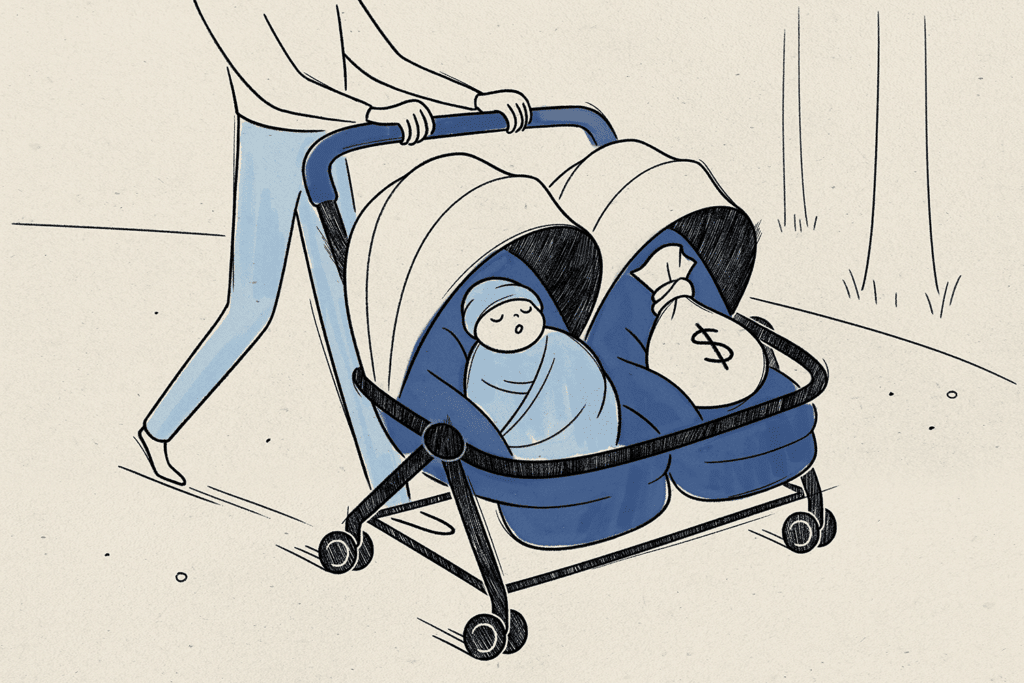
The "sandwich generation" phenomenon is no longer just a catchphrase; it is a financial reality for millions. Balancing the immediate, high-pressure costs of raising children—from childcare and extracurriculars to the looming specter of university tuition—while simultaneously securing one's own financial future is a complex tightrope walk. However, neglecting retirement savings to prioritize children can lead to long-term dependency that ironically burdens the very children parents seek to protect.
This article explores strategic frameworks for managing these competing priorities, ensuring a stable foundation for the next generation without compromising your own golden years.
1. The Oxygen Mask Principle of Finance
In aviation, the rule is simple: put on your own oxygen mask before assisting others. In personal finance, retirement is your oxygen mask. While there are loans, grants, and scholarships available for education, there are no "retirement loans."
Prioritizing your 401(k), IRA, or equivalent pension scheme is not an act of selfishness; it is a strategic necessity. If you reach age 70 without adequate savings, you may become a financial responsibility for your adult children, potentially hindering their ability to save for their own families. By securing your retirement, you are giving your children the ultimate gift: financial independence.
Key Strategy: Automation
Treat your retirement contribution as a non-negotiable "bill." Automating transfers to brokerage accounts or maximizing employer-matched contributions ensures that your future self is paid before the household budget is exhausted by discretionary spending.
2. Integrated Goal Setting: The 50/30/20 Rule Modified
Traditional budgeting suggests the 50/30/20 rule (50% Needs, 30% Wants, 20% Savings). When raising children, the "Savings" portion often feels squeezed. To manage both retirement and education, consider a bifurcated savings approach:
- Primary Tier: Maximum employer match for retirement (the "Free Money" threshold).
- Secondary Tier: High-yield emergency fund (3–6 months of expenses).
- Tertiary Tier: Split remaining savings between a Roth IRA (which offers flexibility) and a 529 College Savings Plan or similar education-focused vehicle.
3. Maximizing Tax-Advantaged Vehicles
Understanding the tax code is one of the most effective ways to "find" extra money for both kids and retirement.
The Power of the Roth IRA
The Roth IRA is a unique tool for parents. While designed for retirement, contributions (but not earnings) can be withdrawn tax-free and penalty-free at any time. While it is best to leave this money to grow for retirement, it can serve as a "backstop" for emergency educational expenses if scholarships fall short.
529 Plans and the 2024 SECURE 2.0 Act
A common fear for parents is "overfunding" a child’s education account. What if the child gets a full scholarship? Under the SECURE 2.0 Act, beneficiaries can now roll over up to $35,000 of unused 529 funds into a Roth IRA (subject to annual contribution limits and account age requirements). This bridges the gap between education savings and retirement planning perfectly.
4. Teaching Financial Literacy as a Wealth-Building Tool
One of the most expensive aspects of raising children is the "hidden" cost of financial illiteracy. By teaching children the value of money, the mechanics of compound interest, and the reality of household expenses, you reduce the likelihood of them needing "lifestyle subsidies" in their 20s.
- Involve them in budgeting: Let older children see the cost of a family vacation or the impact of utility bills.
- The "Match" Program: If your teenager has a part-time job, offer to match their savings for their first car or college fund. This mirrors the corporate 401(k) structure and builds the habit of long-term thinking.
5. Strategic Debt Management
Debt is the primary enemy of the dual-goal household. High-interest credit card debt or excessive auto loans eat away at the capital that should be compounding in the market.
Mortgage vs. Retirement
While the desire to pay off a home before retirement is strong, if your mortgage interest rate is lower than the average historical return of the stock market (roughly 7–10% for the S&P 500), you may be better off putting extra cash into your retirement accounts rather than the house principal.
Student Loans for Parents
Avoid taking on Parent PLUS loans or private student debt that puts your retirement at risk. It is far better for a student to take on a manageable amount of federal debt—which has income-driven repayment options—than for a parent to jeopardize their final decade of peak earnings.
6. The Role of Insurance and Estate Planning
Retirement planning is not just about accumulation; it is about protection. For parents, Term Life Insurance is a fundamental pillar. It ensures that if the unthinkable happens, your spouse can still retire and your children can still attend college.
Furthermore, a well-structured Will and Power of Attorney prevents legal costs and family disputes from eroding your estate. Ensure your beneficiary designations on retirement accounts are up to date, as these typically override what is written in a will.
7. Analyzing the "Late-Start" Scenario
If you started your family later in life or delayed saving for retirement, you may need to adopt a "catch-up" strategy.
- Catch-up Contributions: Once you reach age 50, the IRS allows additional contributions to 401(k)s and IRAs.
- Downsizing Early: Consider moving to a smaller home or a lower-cost area once the children move out, rather than waiting until the actual retirement date. This can free up significant equity for a final "sprint" in savings.
Conclusion: The Long Game
Retirement planning while raising children is not about choosing one over the other; it is about finding the equilibrium where both can thrive. By utilizing tax-advantaged accounts, maintaining a strict "me-first" retirement policy, and educating your children on financial independence, you create a legacy of stability.
Remember, your children will have decades to earn, save, and invest. You have a finite window. Protect your future, and you will ultimately protect theirs.
Would you like me to create a table comparing the tax benefits of different retirement and education savings accounts?
Related