
Navigating the Digital Minefield: Common Cybersecurity Risks and How to Prevent Them

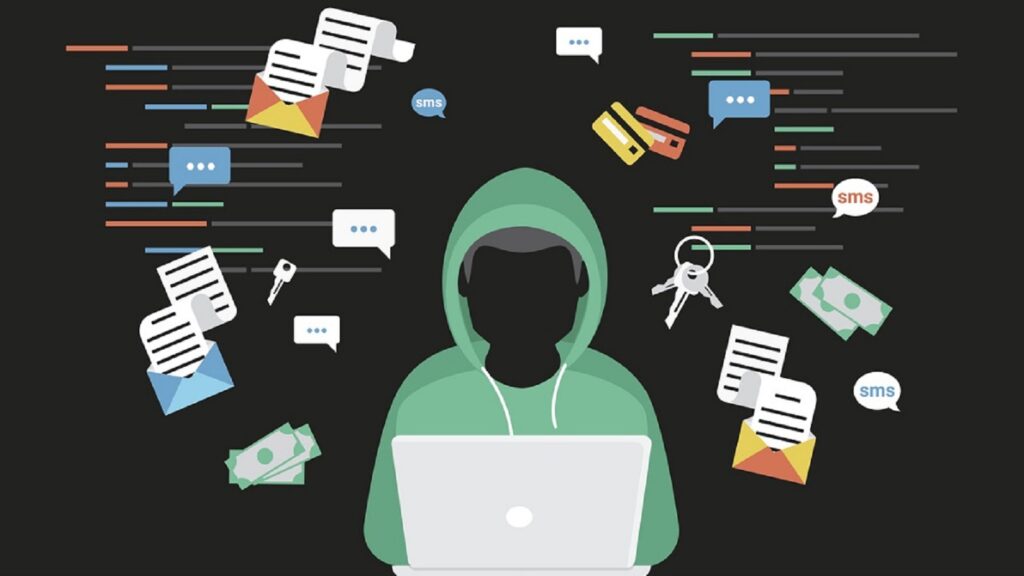
In our hyper-connected 2026 landscape, the line between the physical and digital worlds has almost entirely vanished. As we lean more heavily on artificial intelligence, cloud-native architectures, and global supply chains, the "attack surface"—the total number of points where a cybercriminal can enter a system—has expanded exponentially.
For businesses and individuals alike, staying safe is no longer about just "having an antivirus." It is about understanding a complex ecosystem of threats and building a proactive culture of resilience. This guide explores the most prevalent cybersecurity risks of 2026 and provides actionable strategies to mitigate them.
1. The Rise of AI-Powered Attacks
Artificial Intelligence is the most significant driver of change in the current threat landscape. While defenders use AI to detect anomalies, attackers use it to automate and refine their strikes.
- Deepfake Fraud: Attackers now use AI to clone voices or generate real-time video of executives to authorize fraudulent wire transfers or leak sensitive data.
- Automated Phishing: Gone are the days of poorly spelled emails. AI creates highly personalized, context-aware messages that are nearly indistinguishable from legitimate corporate communications.
- Adversarial AI: Malicious actors attempt to "poison" the data used to train AI models, causing them to make biased or insecure decisions.
How to Prevent It:
- Verification Protocols: Establish "out-of-band" verification for high-stakes requests. If a "CEO" asks for an urgent transfer via video call, verify it through a secondary, pre-arranged channel.
- AI Security Governance: Implement frameworks like the NIST AI Risk Management Framework to ensure your internal AI tools are secure and resilient against data poisoning.
2. Advanced Ransomware and Extortion
Ransomware has evolved beyond simple file encryption. In 2026, we see "Triple Extortion" tactics: encrypting data, threatening to leak it publicly, and harassing the company’s clients or stakeholders directly.
- Ransomware-as-a-Service (RaaS): Sophisticated developers sell easy-to-use kits to low-level criminals, democratizing high-end cybercrime.
- Targeting Backups: Modern ransomware specifically hunts for and deletes online backups before triggering the encryption, leaving victims with no easy recovery path.
How to Prevent It:
- The 3-2-1-1 Rule: Maintain 3 copies of data, on 2 different media, with 1 copy off-site and 1 copy immutable (air-gapped or write-once-read-many storage).
- Endpoint Detection and Response (EDR): Use modern tools that monitor behavior rather than just file signatures, allowing you to stop ransomware the moment it starts acting "suspicious."
3. Supply Chain and Third-Party Vulnerabilities
You are only as secure as your weakest vendor. In 2026, attackers frequently bypass a target’s strong defenses by striking a smaller, less-secure third-party provider that has a "trusted" connection to the target's network.
- Software Supply Chain: Vulnerabilities in open-source libraries or legitimate software updates (like the historic SolarWinds or Log4j incidents) continue to be a primary vector.
- Service Provider Risks: Managed Service Providers (MSPs) and cloud vendors are high-value targets because they provide a "key to the kingdom" for hundreds of clients.
How to Prevent It:
- Zero Trust Architecture: Adopt a "never trust, always verify" mindset. Even if a user is on your "trusted" network, they should only have the minimum access necessary for their role (Least Privilege).
- Vendor Risk Assessments: Before onboarding, mandate that vendors provide proof of compliance (e.g., SOC2, ISO 27001) and perform regular security audits.
4. Social Engineering and the Human Element
Despite all our technological advancements, the "human firewall" remains the most common point of failure. Human error accounts for a vast majority of successful breaches.
- Pretexting and Baiting: Scammers create elaborate stories (pretexts) to build trust or leave "malicious" USB drives in public places, hoping a curious employee will plug them in.
- Business Email Compromise (BEC): This remains a multi-billion dollar problem where attackers hijack a legitimate email thread to redirect payments.
How to Prevent It:
- Security Awareness Training: Move away from boring annual slideshows. Use short, story-driven, and interactive simulations that test employees on real-world scenarios.
- Phishing-Resistant MFA: Traditional SMS-based codes are easily intercepted. Use hardware keys (like YubiKeys) or biometric authentication (FaceID/Fingerprint) which are much harder to bypass.
5. IoT and Digital Infrastructure Threats
The "Internet of Things" (IoT) has brought billions of unmanaged devices into our homes and offices—from smart thermostats to industrial sensors. Most of these devices were designed for convenience, not security.
- Botnets: Large networks of compromised IoT devices are used to launch massive Distributed Denial of Service (DDoS) attacks, shutting down websites and services.
- Shadow IT: Employees often connect personal devices or unsanctioned cloud apps to corporate networks, creating invisible security gaps.
How to Prevent It:
- Network Segmentation: Keep IoT devices on a separate, isolated network segment so they cannot communicate with your primary servers or sensitive data.
- Asset Inventory: You cannot protect what you cannot see. Use automated tools to discover and monitor every device connected to your infrastructure.
Essential Cybersecurity Checklist for 2026
| Strategy | Action Item |
| Identity | Enforce Multi-Factor Authentication (MFA) on all accounts. |
| Updates | Use automated "Patch Management" to fix software bugs immediately. |
| Recovery | Test your Incident Response plan with "Tabletop Exercises" twice a year. |
| Visibility | Implement a SIEM (Security Information and Event Management) to log and track activity. |
| Encryption | Ensure all data is encrypted both "at rest" (on the disk) and "in transit" (over the web). |
Conclusion: Building a Culture of Resilience
Cybersecurity in 2026 is no longer a purely technical challenge; it is a business and personal necessity. As threats become more sophisticated and AI-driven, our defenses must become more agile. By implementing a Zero Trust framework, prioritizing human education, and securing the supply chain, you can significantly reduce your risk profile.
The goal isn't just to prevent every attack—that is nearly impossible. The goal is to be resilient: to detect threats early, contain them quickly, and recover with minimal disruption.
Related