
How Blockchain Is Revolutionizing the Financial Industry

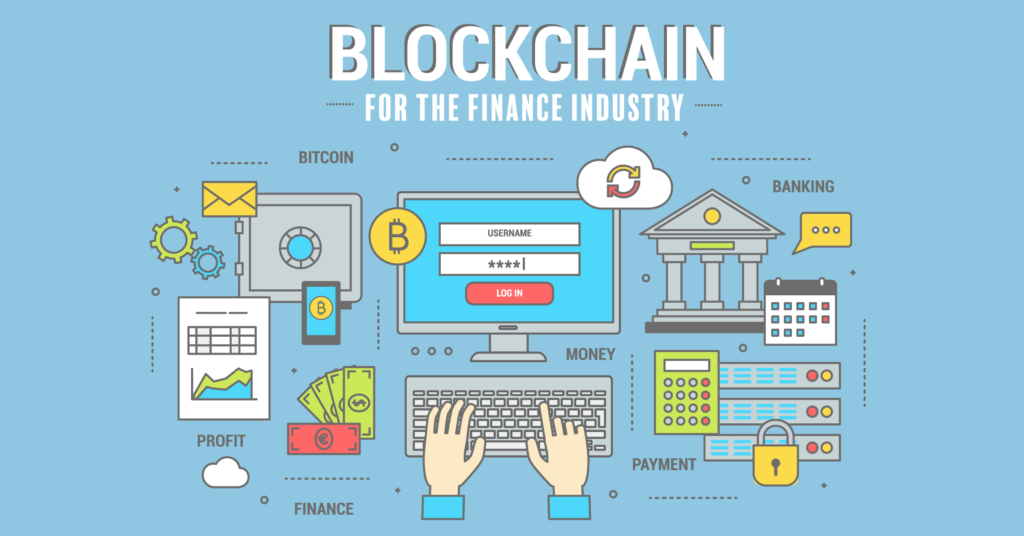
The global financial system has long operated on legacy infrastructure built decades ago. Traditional banking and capital markets frequently rely on centralized intermediaries, fragmented databases, complex reconciliation processes, and multi-day settlement windows. These inefficiencies generate billions of dollars in annual administrative costs while exposing international transactions to friction and delay.
In recent years, distributed ledger technology (DLT)—commonly known as blockchain—has evolved from a novel conceptual framework into enterprise-grade financial infrastructure. Far beyond its early associations with digital currencies, blockchain is now actively reshaping core banking operations, asset management, trade finance, and cross-border settlement mechanisms worldwide.
1. Transforming Cross-Border Payments and Settlement Systems
One of the most immediate structural improvements brought by blockchain technology is the optimization of international money transfers.
Traditionally, cross-border transactions pass through a chain of correspondent banks. Each intermediary in this chain adds fees, requires compliance checks, and increases processing time—often causing international wire transfers to take between two to five business days to clear.
Traditional Settlement:  [Sender Bank] ➔ [Intermediary 1] ➔ [Intermediary 2] ➔ [Recipient Bank]  (2-5 Days)
Blockchain Settlement:   [Sender Bank] ➔───────── Distributed Network ─────────➔ [Recipient Bank]  (Near Instant)
By establishing a single, immutable, real-time shared ledger, financial institutions can eliminate unnecessary intermediary hops. Transactions settle near-instantaneously on a 24/7/365 basis with end-to-end transparency. This reduces transactional friction, lowers messaging costs, and frees up capital that would otherwise remain tied up in Nostro and Vostro accounts awaiting clearing.
2. Real-World Asset (RWA) Tokenization and Capital Markets
Asset tokenization represents one of the most significant architectural shifts in modern capital markets. Tokenization is the process of representing ownership rights of physical or traditional financial assets—such as government bonds, corporate debt, commercial real estate, or private equity—as digital tokens on a blockchain.
| Financial Feature | Traditional Capital Markets | Tokenized Blockchain Networks |
| Settlement Time | T+1 or T+2 days | Near-instantaneous / Real-time |
| Trading Availability | Standard exchange hours | 24/7 continuous operation |
| Ownership Units | Whole-share / high minimums | Fractional ownership |
| Record Reconciliation | Manual multi-party verification | Automated single source of truth |
Through tokenization, illiquid markets become accessible to fractional investment. Issuers benefit from automated lifecycle management, while investors gain enhanced liquidity and transparent provenance records. Institutional asset managers and major custodial trusts are increasingly deploying regulated tokenization infrastructure to issue and trade fixed-income products directly on-chain.
3. Smart Contracts and Automated Compliance
Smart contracts are self-executing programs stored on a blockchain that execute predefined actions automatically when specified parameters are met. In financial services, smart contracts reduce human error and eliminate administrative back-office delays.
Key Applications of Smart Contracts in Banking:
- Trade Finance: Letters of Credit (LCs) historically required stacks of paper documentation, physical verification, and weeks of processing. Smart contracts automatically release funds to exporters once shipping milestones and digital bills of lading are cryptographically verified on-chain.
- Automated Corporate Actions: Coupon payments, dividend distributions, and bond redemptions can be automated directly through ledger logic, executing instantly upon maturity.
- Streamlined KYC and AML Verification: Blockchain-based digital identity frameworks allow verified customer credentials to be shared securely across permissioned institutional networks. This eliminates redundant Know Your Customer (KYC) checks while improving Anti-Money Laundering (AML) monitoring and auditability.
4. Enhanced Security and Tamper-Resistant Auditing
Data security and fraud prevention are major operational priorities for global financial institutions. Traditional centralized databases present single points of failure that can be vulnerable to unauthorized modifications, data breaches, or internal manipulation.
Blockchain operates through cryptographic hashing algorithms and distributed consensus mechanisms. Every validated transaction is bundled into a block and sequentially linked to the preceding block. Once recorded, the data is immutable—it cannot be altered or retroactively deleted without consensus from the network nodes.
This immutability creates a permanent, verifiable audit trail. Regulators, compliance officers, and auditors gain real-time visibility into transaction histories, substantially reducing accounting fraud, unauthorized ledger edits, and reporting discrepancies.
5. Structural Challenges to Widespread Adoption
While the advantages of blockchain technology are substantial, enterprise integration requires navigating several technical, regulatory, and operational hurdles:
- Regulatory Frameworks: Financial regulators across jurisdictions are actively establishing compliance rules for digital assets, stablecoins, and permissioned networks. Enterprise adoption relies heavily on precise legal definitions surrounding asset custody, tax treatment, and cross-border data transfer.
- Interoperability Standards: Hundreds of public and enterprise blockchains currently exist in isolation. For financial markets to operate efficiently, standard protocol bridges must mature to allow seamless communication between different blockchain networks and existing legacy systems (such as SWIFT or core banking databases).
- Scalability and Privacy: Enterprise applications require high throughput (thousands of transactions per second) alongside strict transactional privacy. Emerging privacy-preserving techniques—such as Zero-Knowledge Proofs (ZKPs)—allow institutions to verify transaction validity without exposing sensitive customer data on public networks.
The Road Ahead: A Hybrid Financial Architecture
The transformation of the financial industry is not about the immediate replacement of traditional banking, but rather the integration of blockchain as an essential underlying infrastructure layer.
As central banks continue testing Central Bank Digital Currencies (CBDCs) and global banking institutions integrate distributed ledgers into their clearing pipelines, the boundary between traditional finance (TradFi) and decentralized digital architecture is merging.
The financial institutions that strategically incorporate blockchain technology will reduce operational expenditures, streamline regulatory compliance, and deliver faster, safer, and transparent financial products to global consumers. Blockchain is moving finance into an era defined by efficiency, interoperability, and cryptographic trust.
Related