
Blockchain Technology Explained: The Foundation of Modern Finance

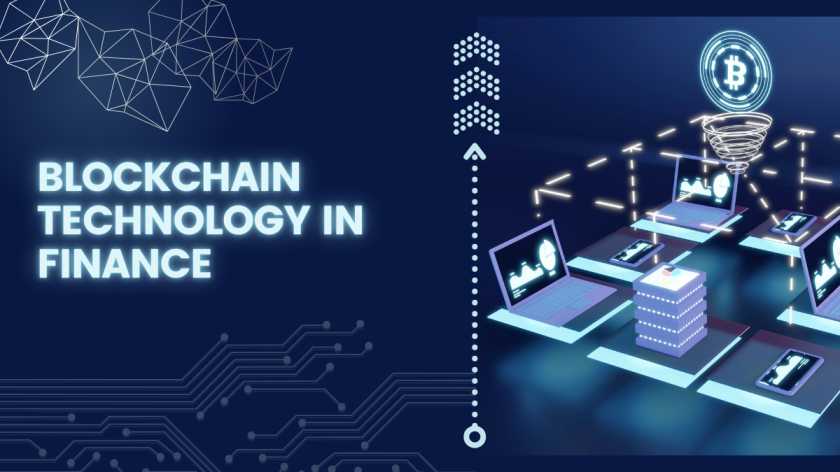
The global financial system has historically relied on centralized intermediaries—banks, clearinghouses, and payment networks—to establish trust, clear transactions, and verify ownership. While these institutions powered centuries of commerce, traditional financial infrastructure faces inherent challenges: high settlement friction, opaque operations, operational bottlenecks, and restricted cross-border accessibility.
Blockchain technology has emerged as a fundamental architectural upgrade for global markets. By substituting centralized authority with cryptographic consensus and distributed ledgers, blockchain provides a programmable, transparent, and immutable foundation for modern finance.
Core Mechanics: How Blockchain Works
At its core, a blockchain is a decentralized, immutable digital ledger distributed across a network of independent computers (nodes). Instead of storing data on a single central server, records are grouped into chronological "blocks," cryptographically linked in a continuous chain.
+----------------+      +----------------+      +----------------+
|  Block N-1     |      |  Block N       |      |  Block N+1     |
| - Transactions | ---> | - Transactions | ---> | - Transactions |
| - Previous Hash|      | - Previous Hash|      | - Previous Hash|
| - Current Hash |      | - Current Hash |      | - Current Hash |
+----------------+      +----------------+      +----------------+
When a new transaction occurs—such as a funds transfer or digital asset issuance—it is broadcast to the peer-to-peer network. Nodes validate the legitimacy of the transaction using predefined protocols before bundling it into a new block. Once verified through a consensus mechanism, the block is appended to the ledger, creating a tamper-proof historical record accessible across the network.
Architectural Components of Blockchain Systems
| Component | Function in Financial Systems | Key Benefit |
| Distributed Ledger | Replicates transactional records across all network participants simultaneously. | Eliminates single points of failure and reconciliation friction. |
| Cryptography | Utilizes public-key encryption and hash functions to secure data integrity and identities. | Ensures user privacy while guaranteeing tamper-resistant asset provenance. |
| Consensus Mechanisms | Algorithmic frameworks (e.g., Proof of Stake, Proof of Authority) to agree on ledger state. | Replaces centralized clearinghouses with automated trust models. |
| Smart Contracts | Self-executing code stored on-chain that automatically triggers actions when terms are met. | Automates compliance, interest payouts, margin calls, and settlement workflows. |
Transforming Financial Infrastructure
Blockchain addresses several systemic inefficiencies in traditional financial operations, driving structural modernization across multiple sectors:
1. Near-Instant Settlement & T+0 Liquidity
Traditional securities settlements typically operate on T+1 or T+2 cycles, trapping liquidity during processing windows. Blockchain platforms enable delivery-versus-payment (DvP) and atomic settlements, resolving asset transfers instantaneously (T+0). This dramatically reduces counterparty risk and frees up collateral for market participants.
2. Frictionless Cross-Border Payments
Cross-border wire transfers historically pass through multiple correspondent banks, incurring steep processing fees and multi-day delays. Distributed ledger technology enables peer-to-peer, borderless transactions that settle within seconds at a fraction of traditional clearing costs.
3. Programmable Money and Tokenized Fiat
Through stablecoins, deposit tokens, and Central Bank Digital Currencies (CBDCs), fiat currency gains programmatic capabilities. Financial institutions can embed conditional logic directly into payments—such as escrow automation, automated tax withholdings, or instant dividend distribution.
Real-World Asset (RWA) Tokenization
One of the most consequential developments in modern capital markets is the tokenization of Real-World Assets (RWAs). Tokenization converts ownership rights of tangible or traditional financial instruments into programmable digital tokens on a blockchain ledger.
- Fractional Ownership: High-barrier asset classes—such as commercial real estate, private credit, and venture capital funds—can be divided into smaller fractional units, democratizing access for institutional and accredited investors.
- Institutional Capital Integration: Major global asset managers now issue on-chain representations of US Treasuries, corporate bonds, commodities, and money market funds.
- Enhanced Collateral Mobility: Tokenized assets can seamlessly move across decentralized platforms and traditional financial venues, serving as yield-bearing collateral for 24/7 liquidity management.
Addressing Industry Challenges
While the structural advantages of blockchain technology are clear, institutional adoption requires navigating operational and regulatory considerations:
- Regulatory Compliance: Financial institutions require clear legal frameworks around digital asset custody, market conduct, anti-money laundering (AML), and know-your-customer (KYC) identity protocols.
- Interoperability & Fragmentation: As institutions build solutions across diverse public and private chains, robust cross-chain communication protocols are necessary to prevent liquidity fragmentation.
- Scalability & Security: Enterprise applications demand high transaction throughput, low latency, and rigorous smart contract auditing to prevent software vulnerabilities.
Blockchain technology is no longer an experimental alternative; it has matured into core infrastructure for next-generation capital markets. By combining cryptographic security, settlement efficiency, and asset programmability, blockchain continues to reshape global finance into an open, transparent, and interconnected architecture.
Related